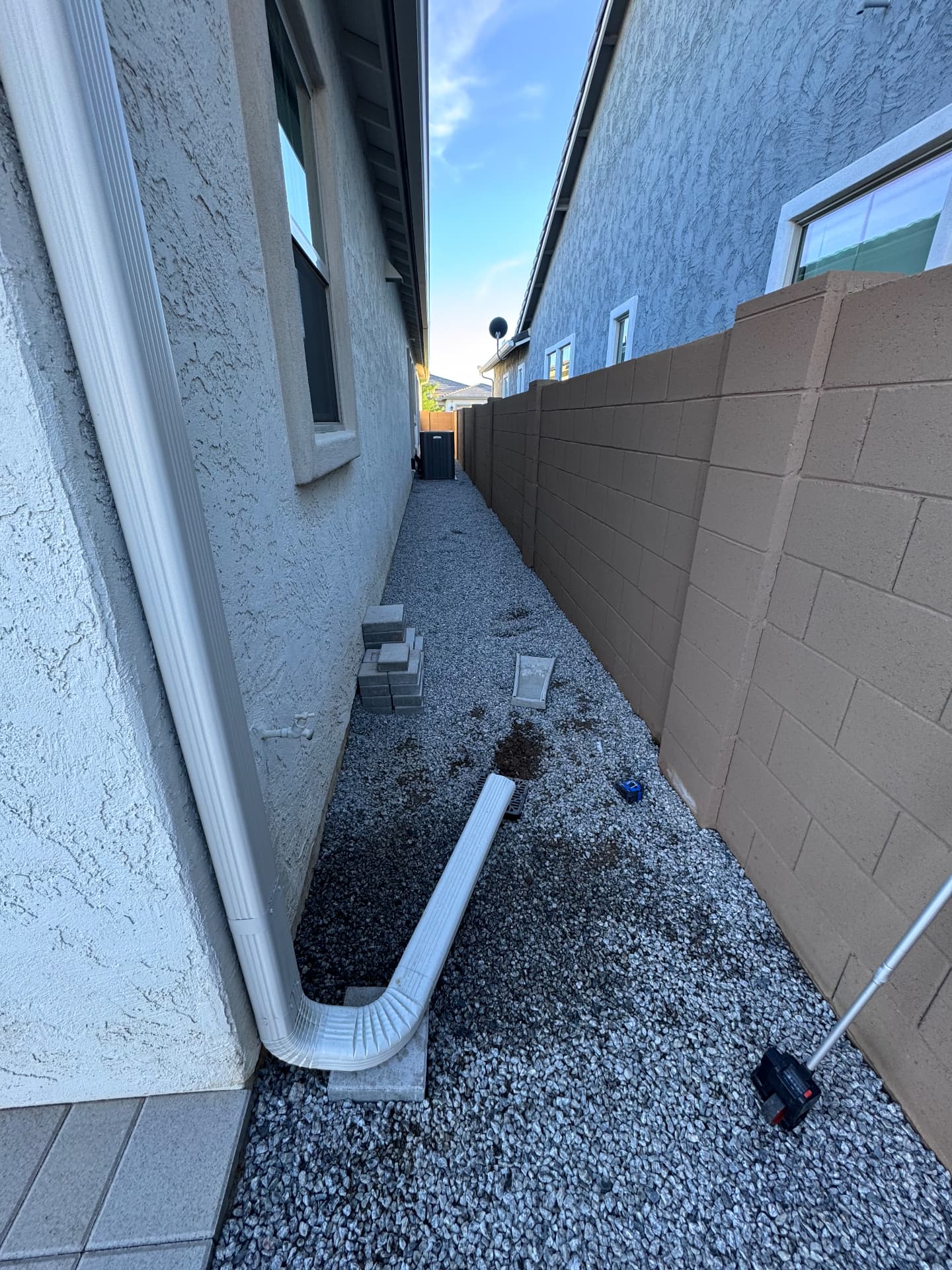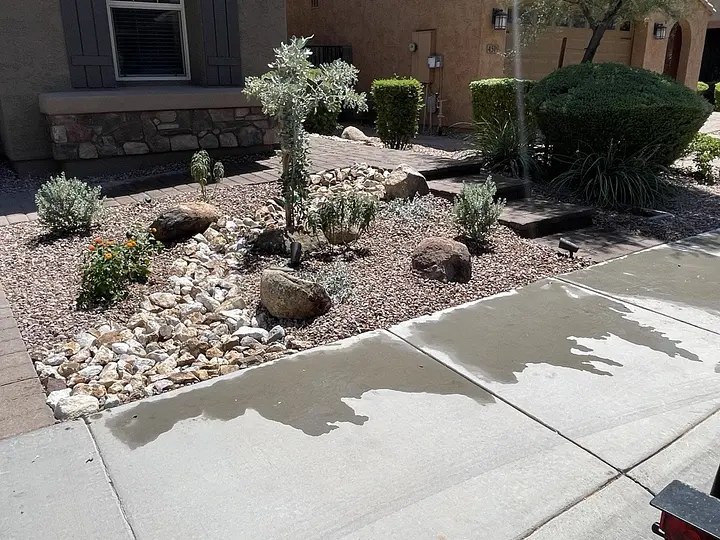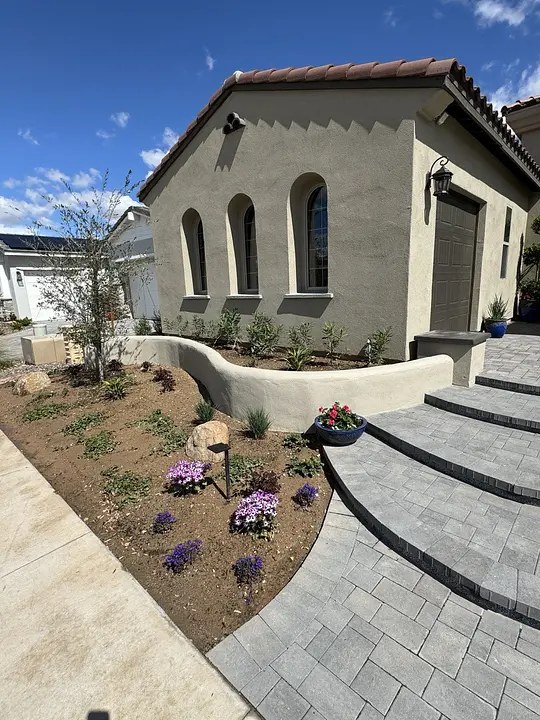
Your Contractor Walked Off the Job. Here's What to Do Next.
By We Do Hardscape LLC · ROC 354091 · November 9, 2026 · 8 min read
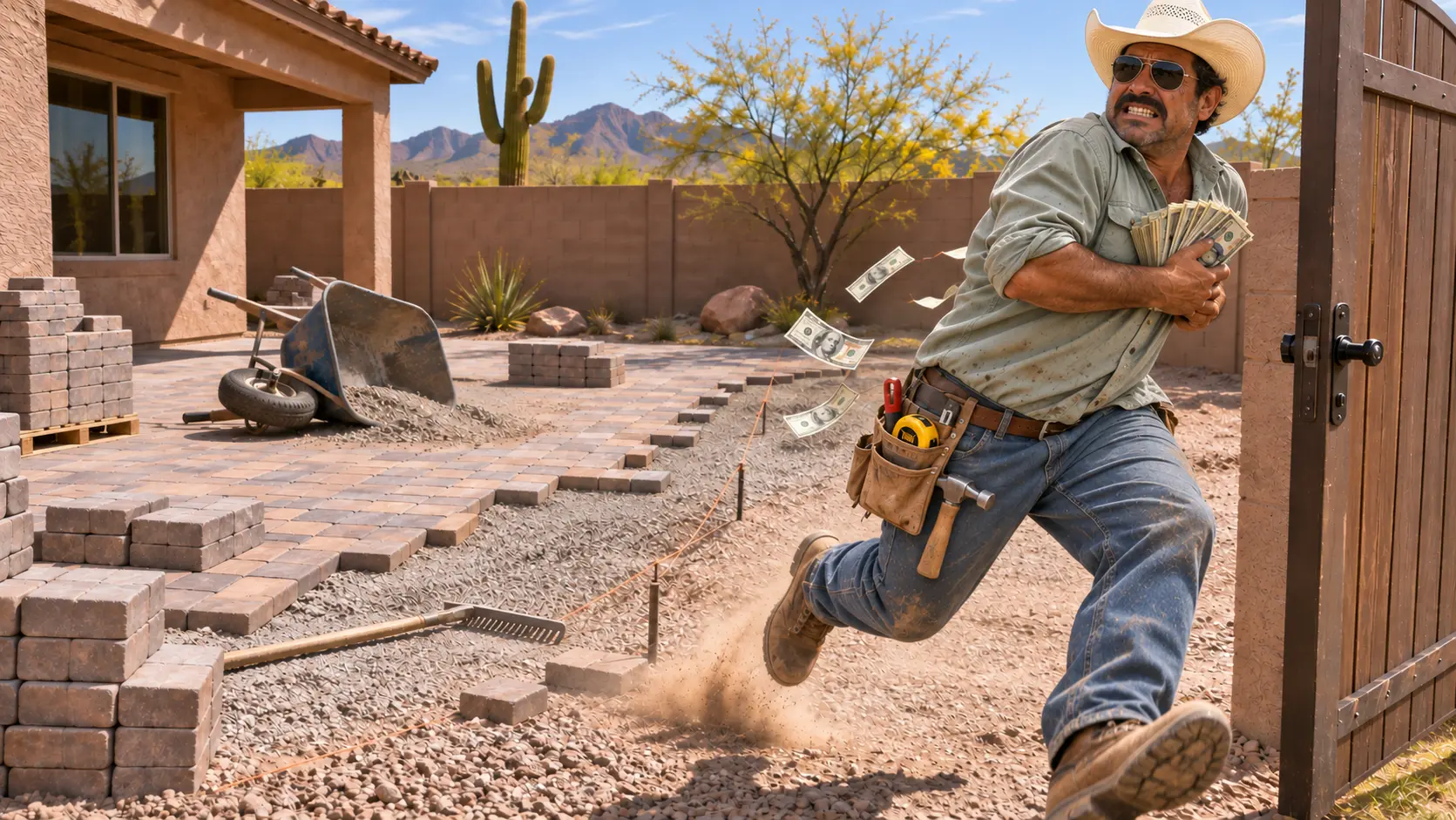
A straight-talk guide for Arizona homeowners whose contractor left the job unfinished: documenting it, the ROC complaint and Recovery Fund, small claims, liens, and getting it finished right.
I'm PJ Sparks, owner of We Do Hardscape (ROC 354091). I've spent the last six years in the field building patios, block walls, turf yards and outdoor living spaces across the Valley. And some of the calls I get start the same way: "Our last contractor took the deposit, tore up the backyard, and stopped showing up."
If that's you right now, I'm sorry. It's stressful, it's expensive, and your yard probably looks worse than before anyone touched it. The good news is you have real options in Arizona. Here's the playbook I'd hand my own family.
Why contractors walk off jobs
I'm not making excuses for anyone, but understanding the "why" helps you figure out your next move. In my experience it usually comes down to one of these:
- They underbid the job. The number looked great when you signed. Halfway through, they realized they were going to lose money and stopped.
- They took on too much work. Some guys sell five jobs and only have the crew for two.
- Cash-flow problems. This is the big one. A contractor uses your deposit to finish someone else's job, and now there's nothing left to buy your materials.
- License or legal trouble. A suspended license, an insurance lapse, or other problems can shut a company down fast.
- A payment or scope dispute. Sometimes both sides think the other one broke the deal.
- Life happens. Illness, family emergencies, a business falling apart.
Knowing which one you're dealing with tells you whether a phone call might fix it, or whether you need to go straight to the Registrar of Contractors.
Step 1: Confirm the job is actually abandoned
Before you escalate, make sure it's not a material delay or a scheduling mix-up. Hardscape jobs stall for legit reasons: pavers on backorder, a block delivery pushed, monsoon rain, an inspection.
Reach out in writing (text and email, not just a phone call) and ask for a specific return date. Pull out your contract and check what it says about the schedule. If you get silence, vague promises, or excuses that keep changing, it's time to move to the next steps.
Step 2: Document everything like you'll have to prove it
Because you might. Do this before anyone else touches the site:
- Photos and video of the whole job, wide shots and close-ups, with dates. Show what was finished, what wasn't, and anything done wrong (uneven pavers, no compaction, cracked footings, bad drainage).
- Your contract, any change orders, and the original estimate.
- Every payment: checks, card receipts, Zelle or Venmo screenshots.
- Every message: texts, emails, voicemails. Screenshot them and back them up.
- A simple timeline: when you signed, when they started, the last day anyone showed up, and every time you reached out.
- Names of anyone who saw what happened: neighbors, your HOA, other trades on site.
One tip from the field: don't let a new contractor tear anything out until it's documented. Once bad work is demoed, it's hard to prove it was bad.
Step 3: Look up their license
Go to roc.az.gov and search the contractor's name or license number. You want to know:
- Are they licensed, and for the right classification? (For example, hardscape work like ours falls under CR-21.)
- Is the license active, suspended, or revoked?
- Do they already have complaints on file?
This matters a lot. Your strongest protections in Arizona, including the Recovery Fund, only apply if you hired a licensed residential contractor. If they weren't licensed, you'll mostly be relying on the courts.
Step 4: Send a demand letter
A lot of disputes end right here. A clear, professional letter shows you're organized and serious. Keep it calm and factual, and include:
- What you hired them to do and what you paid
- What's unfinished or done wrong (attach photos)
- Exactly what you want: come back and finish by a certain date, or refund a specific amount
- A reasonable deadline, usually 10 to 14 days
- What you'll do if they don't respond: file with the ROC and/or in court
Send it certified mail with return receipt, and email a copy too. Keep a copy for your records.
Step 5: File a complaint with the Arizona ROC
This is the step a lot of homeowners don't know about, and it's one of the most powerful.
When you file a complaint with the Registrar of Contractors, they can investigate, send an inspector to the job, and order the contractor to come back and correct the work. If the contractor doesn't comply, their license can be disciplined, and for licensed contractors that's a big deal. Our license is our livelihood.
If you're a homeowner and the complaint leads to discipline against a residential contractor's license, you may be eligible for the Residential Contractors' Recovery Fund. It's currently capped at $30,000 per claimant, and there's a total cap per license. Lawmakers have been talking about raising those limits, so check roc.az.gov for the current rules.
Don't wait on this one. The ROC has filing deadlines, so the sooner you file, the better.
Step 6: Know your court options
If the ROC route doesn't make you whole, or the contractor wasn't licensed, you can take it to court:
- Small claims (Justice Court): In Arizona, the limit is now $5,000. It's cheap to file, you don't need a lawyer (attorneys generally aren't allowed unless both sides agree), and it moves fast. The trade-off is that there's no appeal, so come prepared.
- Justice Court civil: For bigger claims, up to $10,000.
- Superior Court: Anything above that. At this level, talk to a construction attorney.
The common legal claims are breach of contract (they didn't do what they agreed to) and, in some cases, fraud or unjust enrichment (they took your money knowing they wouldn't finish). An attorney can tell you which fits your situation.
One honest warning: a court can award you money, but it can't make anyone finish your patio. And winning a judgment against a contractor with no money is not the same as getting paid. That's why the ROC route is often the better first move for licensed contractors.
Figuring out what you're owed
Your damages usually include:
- What it will actually cost to finish the job (get written estimates from other licensed contractors)
- The cost to fix or remove bad work
- Extra costs caused by the delay, like equipment rentals or HOA fines
You can't collect twice for the same thing, so keep your numbers clean and backed up by paperwork.
Step 7: Watch out for liens
This catches people off guard. If your contractor didn't pay their suppliers or subs, those companies may be able to put a mechanics' lien on your home, even though you already paid the contractor.
If you got any "preliminary 20-day notices" in the mail during the job, hang onto them. They tell you who supplied labor or materials. Going forward, ask for lien waivers whenever you make a payment. If a lien does get filed, call an attorney.
Step 8: Get the job finished the right way
When you bring in someone new to finish the work, expect a few things:
- It may cost more than the remaining balance on your old contract. The new contractor has to take responsibility for work they didn't start, and sometimes that means tearing out what was done wrong. On hardscape, the problems are usually underneath: a base that wasn't compacted, wrong slope, no drainage plan. Pavers laid on a bad base will fail no matter how good they look on day one.
- Get two or three written estimates from licensed contractors.
- Ask how they'll handle warranty on work they didn't do.
- Those estimates double as evidence for your ROC complaint or court case.
How to keep this from happening again
After cleaning up a few of these, here's what I'd tell any homeowner before hiring anyone, including us:
- Verify the ROC license and the classification.
- Get a detailed written contract with scope, materials, timeline, and payment schedule.
- Tie payments to progress, not the calendar. Don't pay way ahead of the work.
- Ask for lien waivers with every payment.
- Check reviews and the BBB. Look at how they respond to complaints, not just how many stars they have.
- Watch the communication early. If they're hard to reach before you sign, it won't get better after.
- Be careful with a bid that's way lower than everyone else's. That's often how jobs end up abandoned.
We finish what others start
At We Do Hardscape, we take on finish-out and repair jobs across Phoenix and the Northwest Valley. Our company runs on a simple idea from 1 Thessalonians 4:11: work with your hands and do it in a way that earns people's trust. We're ROC-licensed (354091), and we'll give you an honest assessment of what's there, what needs to be redone, and what it'll take to get it right.
If your contractor left you with a half-built yard, call us at (602) 626-0409 or book a free discovery call.
— PJ SparksOwner, We Do Hardscape
This post is general information from a contractor's perspective, not legal advice. I'm not an attorney. Laws, limits and deadlines change, so check with the Arizona Registrar of Contractors, the Arizona courts, or a licensed attorney about your specific situation.
Frequently asked questions
What's the small claims limit in Arizona?
$5,000 in the small claims division of Justice Court. Attorneys generally aren't allowed unless both sides agree, and there's no appeal.
How much can I get from the ROC Recovery Fund?
Currently up to $30,000 per claimant, and only when a complaint against a licensed residential contractor leads to discipline on their license. Check roc.az.gov for current limits.
Can a supplier put a lien on my house even if I paid my contractor?
Yes, in some cases. Unpaid subcontractors and suppliers may be able to file a mechanics' lien. Ask for lien waivers with every payment and talk to an attorney if one gets filed.